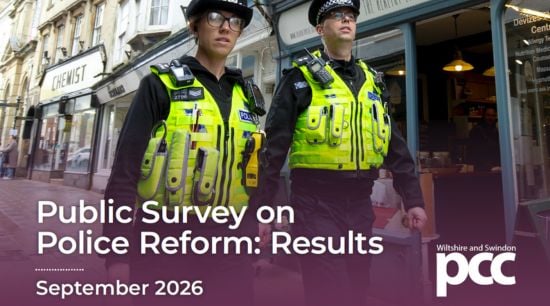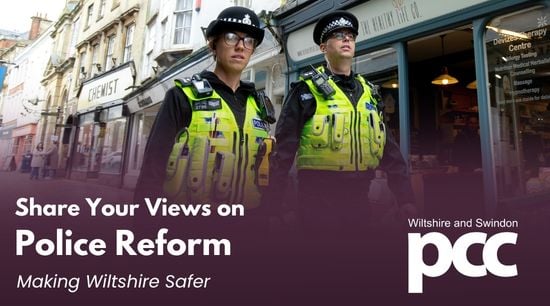
Share Your Views on Police Reform
Share Your Views on Police Reform
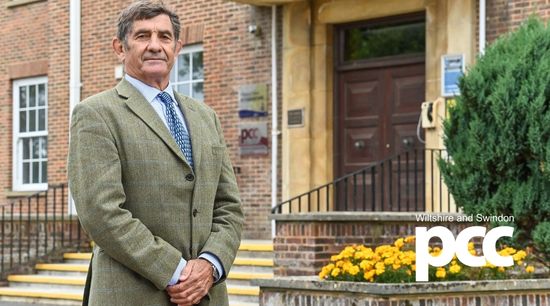
Wiltshire Police and Crime Commissioner Philip Wilkinson is inviting residents across Wiltshire and Swindon to have their say on the Government's proposals for police reform - including plans that could see police forces merged into much larger regional organisations and significant changes to how policing is governed.
The proposals, set out in the Government's Police Reform White Paper, represent one of the biggest changes to policing in a generation.
While Mr Wilkinson has been really vocal in support of aspects of reform aimed at improving national standards, technology, training and specialist capabilities, he has raised concerns about the potential impact on local policing, accountability and taxpayers.
Concerns over police force mergers
The Government is considering reducing the number of police forces across England and Wales from the current 43-force model to a smaller number of larger regional forces.
Mr Wilkinson has warned that large-scale force mergers – which could see Wiltshire joined as far west as Devon and Cornwall - could be costly, disruptive and risk moving policing further away from the communities it serves. He cautions that: ‘Bigger in not always better’.
He believes:
- Local accountability could be weakened if decision-making moves further away from Wiltshire communities.
- Significant merger costs could divert money from frontline policing for many years.
- Rural policing priorities could receive less focus within larger regional organisations.
- Residents could face increased costs without seeing improvements in local policing services.
- The direct link between local people and those responsible for policing could be lost.
Mr Wilkinson said:
"Policing needs reform and there is much in the Government's proposals that I support, including stronger national standards, improved procurement, better data sharing and enhanced capabilities to tackle serious organised crime and terrorism.
"However, bigger isn't always better. Creating large regional forces and concentrating power at the centre risks weakening the community-based policing that local people rely on and reducing local accountability.
"Neighbourhood policing works best when it is shaped by local communities and backed by direct democratic accountability. Any reform must strengthen local policing, not weaken it."
Supporting reform where it makes sense
The Commissioner has consistently said there is a need for policing reform and supports measures that improve efficiency and consistency across the service.
This includes:
- National standards for training and leadership.
- Better sharing of information and technology between forces.
- More efficient procurement of vehicles, equipment and uniforms.
- Stronger national capabilities to tackle serious and organised crime.
- Improvements in police culture, standards and leadership.
However, he believes these improvements can be achieved without removing local accountability or creating large regional policing structures.
Under the proposals, every Local Policing Area would have ring-fenced teams of police officers and Police Community Support Officers dedicated to visible neighbourhood policing and problem-solving.
Although the Government has indicated future funding arrangements would incentivise forces to place more officers into neighbourhood policing roles rather than allocating resources through broader workforce targets there is no further detail on this as yet.
Supporters argue dedicated Local Policing Areas could strengthen visible neighbourhood policing, provide greater focus on local problem-solving and encourage forces to place more officers into community-based roles.
But some PCCs, including Mr Wilkinson, and policing leaders have questioned how the model would work alongside larger regional police forces and new governance arrangements.
They argue that neighbourhood policing depends not only on dedicated local teams but also on strong local accountability, local decision-making and sufficient funding to ensure officers remain visible and connected to the communities they serve.
Concerns about local accountability
Alongside force mergers, the Government has proposed changes to the governance of policing, including the future abolition of Police and Crime Commissioners.
Mr Wilkinson has warned that these changes could dilute local accountability and reduce the public's direct influence over policing decisions.
He believes that policing is most effective when local priorities are set by communities and when those making decisions remain directly accountable to local residents.
"The public deserves a say in their policing. Reform should focus on efficiency, standards and leadership, but never at the expense of strong local policing or local accountability."
Have Your Say
The Government is not currently running a public consultation on these proposals.
To ensure the views of Wiltshire and Swindon residents are heard, Mr Wilkinson has launched this survey to gather feedback on the proposed reforms.
Whether you support the changes, have concerns about specific proposals, or simply want to share your views on the future of local policing, we want to hear from you.
Your feedback will help inform the Commissioner's ongoing engagement with Government and national policing bodies as discussions on police reform continue.