Safer knives scheme launched in Swindon
Wiltshire Police is set to become the latest force in England to trial replacing pointed kitchen knives with rounded tip alternatives, as part of a scheme aimed at reducing serious violence and injuries in the home.
Participants will be offered the opportunity to exchange traditional pointed kitchen knives for specially designed rounded versions, alongside advice and support intended to reduce the likelihood of knives being used in violent incidents.
The scheme, which will begin in Swindon and is being delivered by Wiltshire Police, is funded through the Drug Forfeiture Fund, with backing from the Office of the Police and Crime Commissioner and will target households identified as being at greater risk of knife related harm.
ONS data and police analysis suggests that knives originating in the home feature prominently in both domestic incidents and street violence, reinforcing the case for interventions focused on access and opportunity.
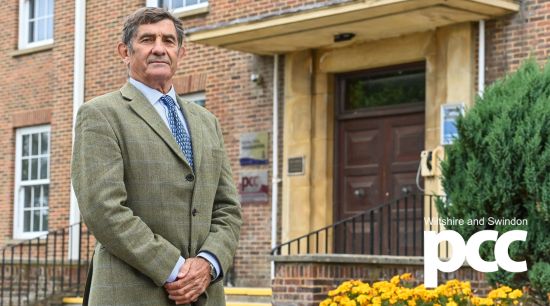
Philip Wilkinson, Police and Crime Commissioner for Wiltshire and Swindon, said:
“We have seen all too often the devastating impact that knife crime can have on individuals, families and communities, even in areas where overall levels are relatively low.
“It’s important we invest in measures which make our residents feel safer and steer those who are most at risk away from harm. This is about taking a long term, evidence led approach, investing in early intervention and supporting initiatives that prevent violence before it escalates.
“By using funding recovered from criminal activity to back schemes like this, we are reinvesting directly in the safety of our communities and helping to reduce harm at its source.”
Knife crime remains a persistent concern across England and Wales, with kitchen knives among the most commonly used weapons in serious violence.
Inspector David Tippetts is leading the scheme:
“This pilot is about taking a practical, preventative approach to reducing harm.
"We know that many knives used in serious incidents come from the home, so by working with families to replace pointed blades with safer alternatives, we can help reduce risk without impacting everyday life.
"It’s a simple change, but one that has the potential to make a real difference in keeping people safe.”
Researchers and practitioners increasingly point out that many incidents do not involve specialist weapons, but ordinary domestic items, something that has prompted a broader rethink about how harm can be prevented before it occurs.
Advocates of rounded tip knives argue that a small design change could make a meaningful difference. Research led by De Montfort University has found that while kitchen knives remain sharp enough to cut food, removing the pointed tip significantly reduces their ability to penetrate clothing, a key factor in serious injury.
In one study, rounded tip blades failed to pierce materials such as cotton and denim even after repeated stabbing motions, while conventional pointed knives consistently caused damage.
The findings build on earlier work suggesting that the tip of a blade is the primary feature responsible for penetrating injuries, meaning its removal could limit harm without affecting everyday use.
Professor Leisa Nichols-Drew, Associate Professor in Forensic Science at De Montfort University, said:
"The evidence from our research is clear: rounded tip knives are safer. Our tests show that rounded blades failed to pierce any of the four fabrics we used, while pointed knives caused damage consistently.
“We don't need pointed tips to prepare food, rounded blades have been shown to be excellent choices for kitchen work. Replacing them is one of the simplest interventions we can make, reducing the risk of both accidental injury and violence without impacting everyday use.”
Wiltshire Police’s approach draws heavily on pilots elsewhere, most notably in Kent and Medway, where the Safer Knife Replacement Scheme has influenced similar schemes across the country in a multi-agency and public health approach to reduce knife harm.
There, police and partner agencies have worked with families to swap out pointed knives for rounded alternatives, focusing particularly on homes where there are concerns about violence, exploitation or vulnerability.
Early indications from these schemes suggest they can help lower risk both within the home and beyond it, with rounded blades seen as less attractive for use in violent situations.
The pilot by Wiltshire Police is framed as part of that wider shift, a public health approach that aims to reduce harm by addressing the conditions in which violence becomes more likely.